Ireland
Surprised by JoyIreland is both the setting of the narrator’s childhood and the measure by which he first judges the world beyond it. Its family traditions, schools, and varied landscapes provide the home ground from which England appears alien; later, remembered Irish scenes give physical form to contrasts between ordinary life and imaginative longing.
Family Origins and Childhood
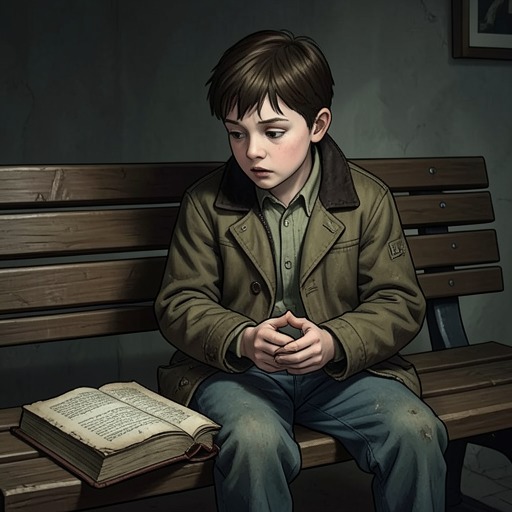
The narrator was born in Belfast in the winter of 1898, the younger of two sons. His parents brought together markedly different family temperaments: his father’s Welsh family was, as he recalls it, emotionally expressive, while his mother’s Hamilton family was cooler and more inclined to happiness. He noticed the difference from an early age, especially the contrast between his mother’s cheerful, tranquil affection and his father’s emotional fluctuations. His account makes Ireland not merely a birthplace but the setting of the family life through which he first learned to distrust emotion as uncomfortable and potentially dangerous.
The household was also intellectually bookish. His mother, a promising mathematician and graduate of Queen’s College, Belfast, began teaching him French and Latin; his father, a gifted speaker with political interests, was shaped by a different kind of public life. These details place the narrator’s early education within an Irish family whose interests ranged from languages and novels to politics and rhetoric.
Schooling and the Departure for England
In 1910, after Oldie’s school closed, the narrator’s father arranged for him to board at Campbell College, about a mile from the New House. The school had been founded to give Ulster boys the advantages of a public-school education without requiring them to cross the Irish Sea. The narrator welcomed the plan: he assumed that an Irish school could not be as bad as the English school he had already experienced. At Campbell, however, he stayed only briefly. Its social mixture and comparatively informal organization distinguished it from the English public schools he knew by reputation; prefects mattered little, houses were largely nominal, and games were not compulsory.
His earlier journey from Ireland to England had made the contrast more painful. Leaving Belfast by boat, he watched the quay lights recede across the water and felt an unfamiliar excitement in the ship’s lights and sounds. After a rough night, he and his brother reached England in the early morning. The flat Lancashire landscape, unfamiliar accents, fences, brick farmhouses, and broad fields struck him as alien and confining. He later says that his hostility toward England took years to heal. Ireland’s landscape and proximity to the sea had formed the standard against which that first English landscape failed.
The later school at Wyvern helped repair the divide. Its blue plain and green hills delighted him, and he came to see the building of Wyvern Priory as beautiful. He also made his first real friends at Chartres. Yet this period had a profound religious consequence: he ceased to be a Christian while at Chartres, though the chronology of the change remained imprecise in his recollection. Ireland thus belongs to the beginning of a longer education that carried him away from home and into changes of belief as well as place.
Landscapes of Belonging and Longing
In his retrospective account, Irish landscapes are not interchangeable scenery. The hills above Belfast give him distinct views of the lough, the industrial city, and the countryside beyond. From one vantage, Belfast’s shipyards, cranes, chimneys, and traffic fill the valley; their noise does not simply break the hilltop’s peace, but intensifies its contrast with the quieter ground above. The city below also represents working life and social hardship, while the view toward the Mourne Mountains opens onto a landscape he associates with longing.
This way of remembering place mirrors the narrator’s account of his inward life. Looking back on his school years, he insists that outward weariness and inward imaginative ecstasy were both true, though they seemed to belong to separate lives. The sensory abundance of remembered Ireland—its hills and fields, alongside the industrial sounds of Belfast—helps him give shape to that duality without resolving it into a single account of happiness or misery.
Ireland in the Formation of Belief
The narrator’s religious and intellectual changes are recounted across several settings, but Ireland remains part of the background against which those changes acquire meaning. At Chartres, occult interests and the burden he imposed on his nightly prayers contributed to his departure from Christianity; reading classical authors also raised questions about why Christianity should be treated as uniquely true among religions. Later, the writings of Yeats and Maeterlinck unsettled his materialism by presenting non-Christian accounts of a reality beyond the material world. These are stages in the memoir’s intellectual history, not developments attributed simply to Ireland.
His later exchange with Barfield likewise changed his thinking without reducing the transformation to geography. Barfield challenged his assumption that the intellectual fashions of the present were automatically superior to the past and exposed tensions in a worldview that treated the senses as the foundation of reality while still claiming objective authority for logic, morality, and aesthetic judgment. The memoir’s Irish settings remain significant as remembered home ground: they anchor a life whose religious and philosophical questions were worked out through schools, reading, friendship, and reflection elsewhere.